
In the very heart of the capital, amidst crucial discussions and the rustling of book pages, Lutsk offered a reminder: big changes are often born in small yards, in family archives, and in voices that echo in the city’s memory.
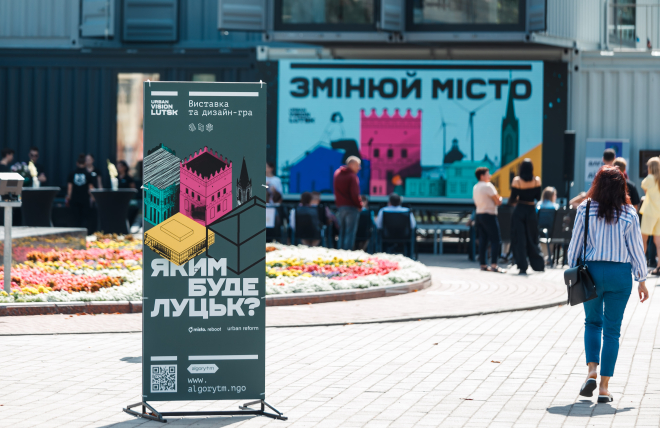
At the “Fundament: Stories About Culture” book festival, the Algorytm platform team — as part of the Urban Vision Lutsk program, and in collaboration with the Frontera literary platform and the Pako House space — presented the “District. House. Pokalchuk” exposition. It served as a journey through the city, a family home, and the history of the Pokalchuk family.

Filled with stories bridging Lutsk’s past and future, the exposition ran from October 23 to November 23. According to the organizers, 10,000 people visited the Ukrainian House during the Fundament book festival and the “Journey” exhibition cycle.
“District. House. Pokalchuk,” presented by Algorithm of Actions, is a strategic step designed to demonstrate that Lutsk’s local narratives hold profound value for the entire country. We intertwined the urban study of the Kichkarivka district with the legacy of the Pokalchuk family to illustrate how the memory of a city becomes a vital resource for its development. We also unveiled the vision for Pako House — a future international residency. In doing so, we prove that the transformation of a city begins with the stories we rediscover, and that investing in culture is the spark that brings cities into the spotlight.
Level One: A District That Speaks Slowly and in Its Own Way

In Kichkarivka, you won’t hear the roar of the city center, but rather the measured breath of homes and gardens. Such neighborhoods rarely catch the researcher’s eye, yet they are the very places that harbor a unique form of urban memory.
The Urban Vision Lutsk team, alongside students from the Kyiv School of Economics and the Kharkiv School of Architecture, engaged local communities to map the district’s memory. They gathered recollections, listened to voices, and studied the area’s spatial fabric. Visitors to the exhibition encountered a "living map" — a patchwork quilt woven from interviews, facts, insights, and research findings. Each fragment revealed a truth: a district is not merely a territory; it is a way of life, a keeper of warmth, and a familiar rhythm.
Level Two: A Home Opening Itself to the World

Pako House — once the home of the Ukrainian intelligentsia, the Pokalchuk family — is now transforming into a cultural heart. The installation recreated the sensation of a living home: archival photos and the manuscripts of Yurko Pokalchuk. It evoked an understated nostalgia and a quiet sense that time here does not vanish, but becomes fertile ground for the new.
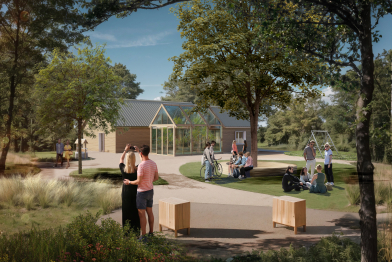
This house is preparing to evolve into an international residency for writers, musicians, translators, and cultural managers. Yet it is already open to cultural life and events, already beginning to breathe the future. This vitality was embodied by the exhibition’s framework: photographs of the wall textures from the real house in Kichkarivka printed on fabric, swaying gently, as if the house itself were breathing.
Level Three: A Family That Became the History of Lutsk

The Pokalchuk family were not merely residents of the city—they were the weavers of its cultural fabric:
- Yurko “Pako” Pokalchuk — writer, translator, scholar, and a human bridge connecting the cultures of different generations;
- Oleh Pokalchuk — social and military psychologist;
- Volodymyr Pokalchuk — a researcher of Lesya Ukrainka’s life and work, who was repressed for his use of the Ukrainian language;
- Oksana Tushkan — Director of the Volyn Local History Museum.
Their stories resonated throughout the exhibition in photographs, family heirlooms, manuscripts, and quotes.

Algorithm of Actions, as part of the Urban Vision Lutsk program, together with the Frontera Literary Platform and the Pako House, demonstrated a crucial truth: city development begins with thoughtful engagement with memory and people, starting from courtyards, archives, and small stories. And when these stories come alive, a new urban language is born.
The festival has ended, but its heroes are moving forward. Kichkarivka continues to hold its stories close, while the team compiles the research into a guidebook for local institutions and residents. Pako House is preparing to welcome guests from around the world. The Pokalchuk name now resonates loudly across the country. And Lutsk itself is gradually growing—not just in height, but in depth.
A city lives when it remembers. And when it boldly creates the new while preserving its core.
Lutsk is exactly such a city.


Photos by Ruslan Synhaievskyi for Ukrainian House and Kateryna Lashchykova